Are Python certifications worth it for getting a job?
Python certifications help as resume credentials but rarely hire you alone. Most Python jobs require a demonstrable portfolio (GitHub repos) alongside certification. PCEP or PCAP combined with 3-5 substantial GitHub projects typically converts to interviews much more effectively than certification alone.
Python remains the most popular programming language in 2026, dominating data science, automation, AI/ML, and web backend development. For beginners, Python certifications offer a way to validate skills and get past ATS filters at non-tech employers. This article ranks the Python certifications worth considering and sets honest expectations about what certification alone can accomplish.
Our cert research team referenced the Python Institute's official exam documentation [1][2], Microsoft Learn [3], W3Schools [4], and 2025 Payscale data on Python developer compensation [5]. We also pulled insights from the TIOBE Programming Community Index [6] and Stack Overflow Developer Survey [7].
A Word of Warning Before Ranking
Python certifications are genuinely useful but often oversold. Most Python jobs at tech-forward companies hire based on take-home coding challenges and technical interviews, not certifications. A GitHub portfolio with real projects will outweigh any certification in most hiring decisions.
That said, certifications have three real benefits for beginners:
- Structure: a defined syllabus forces you to learn concepts you might skip in self-directed study
- Resume signal: ATS systems and non-technical recruiters recognize certification keywords
- Confidence: passing an exam validates that you have actually learned the material
Pair any certification with 3-8 substantive GitHub projects to maximize impact.
Quick Ranking
| Rank | Certification | Cost (USD) | Study Hours | Issuer | Best Fit |
|---|---|---|---|---|---|
| 1 | Python Institute PCEP (PCEP-30-02) | $59 | 40-80 | Python Institute | Absolute beginners |
| 2 | Python Institute PCAP (PCAP-31-03) | $295 | 80-140 | Python Institute | Intermediate step |
| 3 | Microsoft Introduction to Python (98-381 retired, now Coursera path) | $49/month | 60-100 | Microsoft | Microsoft ecosystem |
| 4 | Google Automation with Python (Coursera) | $49/month | 100-160 | Automation/sysadmin | |
| 5 | W3Schools Python Developer Certification | $95 | 40-80 | W3Schools | Budget-conscious |
| 6 | University-issued Coursera certificates (various) | $49-$399 | 60-200 | Varies | Structured learning |
| 7 | Python Institute PCPP (Professional) | $495 | 120-180 | Python Institute | Advanced (not beginner) |
"Python topped the 2024 TIOBE Programming Community Index and remained the fastest-growing major programming language." - TIOBE Index [6]
Rank 1: Python Institute PCEP
PCEP (Certified Entry-Level Python Programmer) is the most beginner-friendly formal Python certification. It costs $59 and runs approximately 40 minutes with 30 multiple-choice and drag-and-drop questions [1].
What PCEP Covers
The current PCEP-30-02 exam covers:
- Basic concepts of programming (7 percent)
- Data types, evaluations, and basic I/O operations (20 percent)
- Flow control (loops and conditionals) (20 percent)
- Data collections (tuples, dictionaries, lists, strings) (17 percent)
- Functions and exceptions (36 percent)
Passing score is 70 percent.
Why PCEP Is Our Top Pick
PCEP hits the sweet spot of low cost, appropriate difficulty for true beginners, and recognized issuer. The $59 price removes financial risk. The 40-80 hour study burden is achievable for most working adults. The Python Institute is backed by OpenEDG, which adds credibility compared to random online certificates.
PCEP Study Plan
A typical 5-8 week plan at 8 hours per week:
- Weeks 1-2: Python Institute's free PCEP-30-02 learning path on OpenEDG.org
- Weeks 3-4: Automate the Boring Stuff with Python by Al Sweigart (free online)
- Weeks 5-6: PCEP practice exams (multiple free ones on OpenEDG)
- Weeks 7-8: Hands-on practice with 3-5 mini-projects
Total cost beyond voucher: $0-$30 for optional materials.
Rank 2: Python Institute PCAP
PCAP (Certified Associate in Python Programming) is the next step up. It costs $295, runs 65 minutes, and contains 40 questions [1]. Passing score is 70 percent.
What PCAP Covers Beyond PCEP
PCAP adds more advanced topics:
- Modules and packages (12 percent)
- Exceptions in depth (14 percent)
- Strings and list methods (18 percent)
- Object-oriented programming (34 percent)
- Miscellaneous topics including regex and file handling (22 percent)
The big jump from PCEP is object-oriented programming at 34 percent of the exam. This is the first serious treatment of OOP many beginners encounter formally.
"PCAP is a professional credential that measures the candidate's ability to perform intermediate-level coding tasks in the Python language." - Python Institute PCAP official page [2]
Who Should Take PCAP
PCAP works best as the second credential after PCEP, typically 3-6 months after the initial PCEP attempt. Jumping directly to PCAP without PCEP is possible but raises study burden significantly.
PCAP is the more employer-recognized of the two Python Institute credentials. If you can only earn one Python Institute certification and your budget allows, PCAP carries more hiring signal.
Rank 3: Microsoft Python Programming Path (Coursera)
Microsoft retired its standalone 98-381 Introduction to Programming with Python exam in 2022. The current path is the Microsoft Python Programming Professional Certificate on Coursera. It costs roughly $49 per month and takes 3-5 months to complete.
The program is structured learning with hands-on assignments rather than a proctored exam. Completion earns a Coursera certificate co-branded with Microsoft.
For readers in Microsoft ecosystems (Azure, Power Platform, Office 365 automation), this path has some brand value. For general Python work, PCEP or PCAP carry more recognition.
Rank 4: Google IT Automation with Python (Coursera)
Google's IT Automation with Python Professional Certificate is a six-course Coursera program. It costs approximately $49 per month with typical completion in 4-6 months.
The program covers Python basics through advanced automation topics like Git, debugging, configuration management, and cloud integration. It is heavy on practical automation scenarios rather than pure Python syntax.
This path fits well for IT professionals and sysadmins transitioning toward DevOps or automation-focused work. It complements certifications like AWS Cloud Practitioner or Azure AZ-104 nicely. Our best DevOps certification for beginners article covers how automation-focused Python fits into DevOps career paths.
Rank 5: W3Schools Python Developer Certification
W3Schools offers a Python Developer Certification with online testing for $95 [4]. It is a self-paced credential with a 70-question online exam.
W3Schools has broad brand recognition as a learning resource but lower weight as a certification issuer compared to Python Institute or Microsoft. The $95 price is low. The main drawback is weaker hiring recognition.
We include it as a budget option for readers who cannot afford PCAP and want something beyond a Coursera completion certificate.
Rank 6: University-Issued Coursera Certificates
Several universities offer Python Professional Certificates through Coursera, including:
- University of Michigan: Python for Everybody Specialization ($49/month, ~3 months)
- IBM: Python for Data Science AI and Development Professional Certificate
- University of Pennsylvania: Computer Science Essentials for Software Development Specialization
These are structured learning programs, not proctored exams. Value depends on target employer. Academic-issuer programs have mixed signal value: some hiring managers value them as near-degree signals, others discount them as "just Coursera."
Rank 7: Python Institute PCPP (Professional)
PCPP (Certified Professional in Python Programming) is an advanced credential requiring substantial Python experience. It costs $495 and has no formal prerequisites but practically requires PCAP plus 1-2 years of Python work.
We include it to note that it exists and is NOT a beginner credential. Most beginners should consider PCPP a 2-3 year goal rather than a starting point.
Python Certification Cost Summary
| Certification | Exam Cost | Prep Materials | Total Realistic |
|---|---|---|---|
| PCEP | $59 | $0-$30 | $59-$89 |
| PCAP | $295 | $20-$80 | $315-$375 |
| Microsoft Python (Coursera) | $49/month | $0 | $147-$245 |
| Google Automation Python (Coursera) | $49/month | $0 | $196-$294 |
| W3Schools Python Developer | $95 | $0-$50 | $95-$145 |
| PCPP | $495 | $40-$120 | $535-$615 |
Salary Data
The hard truth: Python certifications produce smaller salary lifts than certifications in other IT domains. The median salary for Python developers with and without certification is much closer than, say, AWS certified vs non-certified cloud engineers.
| Role | Median Salary (No Cert) | Median Salary (PCAP) | Median Salary (PCPP) |
|---|---|---|---|
| Junior Python Developer | $72,000 | $76,000 | $82,000 |
| Python Automation Engineer | $85,000 | $90,000 | $98,000 |
| Data Analyst (Python-focused) | $78,000 | $82,000 | $92,000 |
| Data Scientist (Python-focused) | $110,000 | $115,000 | $125,000 |
Data from 2025 Payscale and Glassdoor syntheses [5][8].
The median salary lift from PCAP alone is roughly $4,000-$8,000 per year. Compare this to AWS SAA-C03 producing $18,000-$25,000 salary lifts, or CompTIA Security+ producing $15,000-$20,000 lifts.
Why is the lift smaller? Because Python employers typically evaluate through portfolios and coding challenges, not certifications. A strong GitHub beats a strong certification in this market.
"The 2024 Stack Overflow Developer Survey found that formal certifications ranked below personal projects and peer recommendations as trusted signals for Python developer competence." - Stack Overflow Developer Survey 2024 [7]
How to Maximize Python Certification ROI
Given the limited standalone salary lift, here is how to get maximum value from a Python certification.
Strategy 1: Pair with a cloud certification. Python + AWS Cloud Practitioner is dramatically more valuable than Python alone for infrastructure and data roles.
Strategy 2: Pair with a data certification. Python + SQL or Python + Tableau/Power BI is the standard stack for data analyst roles. See our best SQL certification for beginners article.
Strategy 3: Build a portfolio simultaneously. Complete 5-10 GitHub repos showcasing Python skills while studying for certification. The combined package (cert + portfolio) converts to interviews.
Strategy 4: Target non-tech employers. Certifications carry more weight at insurance companies, financial services firms, healthcare organizations, and government agencies than at scale-ups. Target these for first roles.
Strategy 5: Use certifications as stepping stones to specialized paths. PCEP or PCAP as a foundation for AI/ML work (adding AWS ML Specialty or Azure AI Engineer credentials) produces strong ROI. Python as a standalone identity is less valuable.
Python Use Cases and Career Paths
| Career Path | Recommended Certification Stack | Median Mid-Career Salary |
|---|---|---|
| Python Web Developer | PCAP + relevant framework (Django/Flask) portfolio | $105,000 |
| Data Analyst | PCAP + SQL + Tableau | $95,000 |
| Data Scientist | PCAP + AWS ML Specialty or Azure DP-100 | $135,000 |
| DevOps Automation | PCAP + AWS SAA + Terraform Associate | $140,000 |
| Backend Software Engineer | Portfolio >> certification (tech companies) | $125,000 |
| QA Automation Engineer | PCAP + ISTQB | $90,000 |
| Machine Learning Engineer | Portfolio + AWS/Azure ML Specialty | $145,000 |
Study Resources
For PCEP:
- Python Institute's free PCEP-30-02 learning path on OpenEDG.org
- Automate the Boring Stuff with Python by Al Sweigart (free at automatetheboringstuff.com)
- freeCodeCamp's Python for Beginners on YouTube (free)
For PCAP:
- Python Institute's PCAP learning path
- Python Crash Course by Eric Matthes
- Fluent Python by Luciano Ramalho (for OOP depth)
- PCAP practice exams on OpenEDG
For Google Automation with Python:
- Coursera course content is self-contained
- Supplement with Real Python's DevOps guides
General Python learning resources:
- The Official Python Tutorial at docs.python.org
- Real Python (realpython.com)
- Mosh Hamedani's YouTube Python series
- Corey Schafer's YouTube Python series
Hands-On Practice Requirements
Reading alone does not pass Python certifications or land Python jobs. Minimum hands-on practice we recommend:
For PCEP: Build 3-5 small command-line utilities (calculator, file organizer, text processor) entirely in Python.
For PCAP: Build 2-3 OOP-heavy projects (inventory management system, simple game with classes, contact manager with file I/O).
For employer readiness: 5-10 GitHub repos total, at least 2 with public README documentation, ideally 1-2 deployed somewhere (Heroku, Render, or similar).
GitHub commit history matters. 3-5 commits spread over 2-3 months signals consistent practice. 50 commits on one day signals cramming.
Common Beginner Mistakes
Mistake 1: Over-investing in certification at the expense of portfolio. Python is a portfolio-driven hiring market. Ratio should be roughly 30 percent certification study, 70 percent project building.
Mistake 2: Skipping OOP fundamentals. Object-oriented programming is 34 percent of PCAP and essential for most Python roles. Do not skim.
Mistake 3: Choosing bootcamp certificates over Python Institute. Bootcamp names (General Assembly, Flatiron, Hack Reactor) are often better-known than Python Institute, but PCEP/PCAP are globally portable and vendor-neutral.
Mistake 4: Expecting certification alone to get interviews. Budget time for LinkedIn optimization, resume writing, and project portfolio work in parallel with exam prep.
Our Recommended Path
For beginners starting today:
- Free phase (Months 1-2): Automate the Boring Stuff + 3-5 small projects + GitHub account
- PCEP (Month 3-4): $59 + 40-80 study hours
- Portfolio expansion (Months 4-6): 3 more substantial projects (web scraper, API client, data analysis notebook)
- PCAP (Months 7-10): $295 + 80-140 study hours
- Specialization certification (Year 2): AWS Cloud Practitioner, SQL, or data analytics cert depending on target role
- Job search (Year 1 end through Year 2): active application with certifications + portfolio
Total 24-month investment: roughly $550 in Python certifications plus 200-300 hours of study plus ongoing portfolio work.
Expected salary outcome: $72,000-$92,000 in first Python-involving role in most US metros, with trajectory to $95,000-$120,000 by year 3-4.
Python Use Cases Worth Preparing For
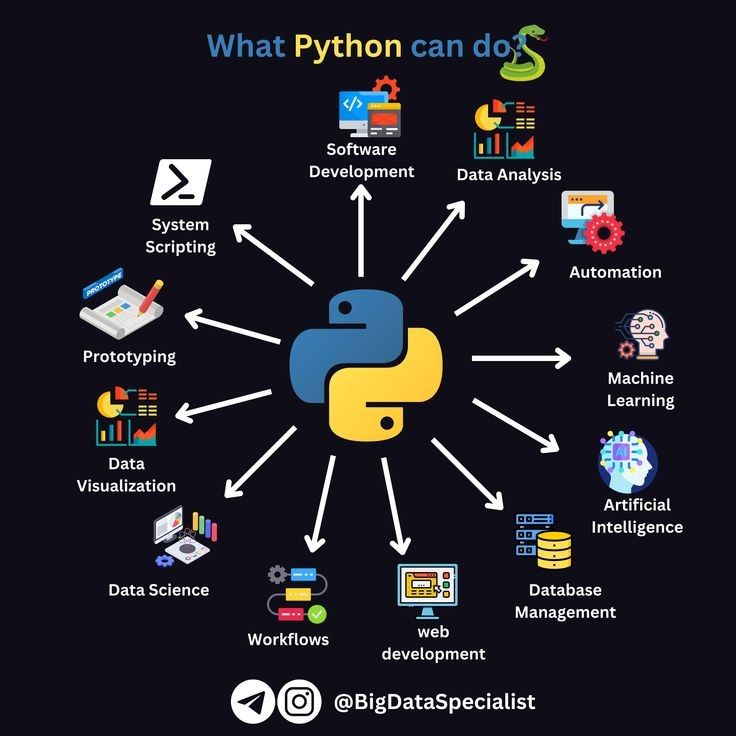
Different Python career paths require different skill emphases. Here is what to focus on based on target role.
For Data Analysis career path:
- Pandas and NumPy for data manipulation
- Matplotlib and seaborn for visualization
- Jupyter Notebook fluency
- SQL skills for database querying
- Statistics basics (descriptive, hypothesis testing)
For Web Backend career path:
- Flask or Django framework
- SQLAlchemy or Django ORM
- REST API design
- Docker containerization basics
- Linux server basics
For Automation career path:
- Requests library for HTTP
- BeautifulSoup or Scrapy for web scraping
- Selenium for browser automation
- Schedule or cron-based task management
- Paramiko for SSH automation
For Machine Learning career path:
- NumPy and pandas (foundation)
- scikit-learn for traditional ML
- TensorFlow or PyTorch for deep learning
- Linear algebra and calculus fundamentals
- Statistics and probability
Focus your Python practice on whichever path matches your target. A data analyst and a web developer need genuinely different Python skills despite sharing the language.
Portfolio Project Ideas by Path
Concrete project ideas that convert to interview signal:
Data Analysis projects:
- Analyze a public dataset (NYC taxi, COVID, stock market) and publish findings
- Build a dashboard for a personal interest area (fantasy football, weather patterns)
- Scrape and analyze social media or forum data
Web Backend projects:
- REST API for a hobby project (workout tracker, book reading log)
- Simple full-stack application (Flask + simple frontend)
- API that calls and aggregates data from other APIs
Automation projects:
- Personal finance scraper pulling data from multiple sources
- Job listing aggregator filtering keywords
- Automated document organizer for your own files
Machine Learning projects:
- Classify text (email spam, sentiment analysis)
- Predict housing prices or similar tabular data
- Build simple recommendation system
Each project should have a clean GitHub README, clear problem statement, and documentation explaining your approach. 3-5 documented projects beat 20 undocumented ones.
Common Interview Questions for Python Roles
First-round Python interviews typically include:
Concept questions:
- Explain the difference between a list and a tuple
- What is a dictionary and when would you use one?
- How does Python handle memory management?
- What are decorators and when have you used them?
Short coding challenges (5-15 minutes):
- Reverse a string without using built-in reverse
- Count the occurrences of each character in a string
- Find duplicates in a list
- Implement a simple Fibonacci function
Discussion of your projects:
- Walk me through your most complex Python project
- What was the hardest bug you debugged?
- How did you decide to structure your code?
Certifications do not directly prepare you for these questions. Practice on LeetCode (Easy and Medium), HackerRank, or Codewars for 30-60 hours alongside certification study.
Free Learning Resources Ranked
We ranked free Python learning resources by reader-reported effectiveness:
- Automate the Boring Stuff with Python (Al Sweigart, free at automatetheboringstuff.com): best for absolute beginners
- Python Crash Course (Eric Matthes, libraries): strong practical introduction
- Real Python (realpython.com): mix of free and paid, consistent quality
- Corey Schafer YouTube channel: excellent video tutorials on specific topics
- Official Python Tutorial (docs.python.org/3/tutorial/): authoritative but dense
- freeCodeCamp Python courses (YouTube): massive collection of Python tutorials
- CS50's Introduction to Programming with Python (Harvard/edX): structured university-quality
Combining one primary resource with Real Python deep-dives for specific topics works well.
Final Verdict
Are Python certifications worth it for beginners? Modestly. PCEP at $59 is essentially risk-free and builds structured foundations. PCAP at $295 carries more hiring signal and is worth the investment for most serious learners.
Neither certification on its own will transform your career. Both work well as part of a broader strategy combining certifications, portfolio, networking, and targeted applications.
If budget is very tight, skip certifications entirely and build a strong GitHub portfolio plus free course completions (Google, freeCodeCamp, Harvard CS50P). The portfolio matters more than the credential in Python hiring.
If budget allows, PCEP is essentially free insurance and PCAP provides meaningful resume signal for non-tech employers.
Either way, the critical success factor is consistent hands-on practice. Code every day. Push to GitHub every week. That discipline will outlast any certification decision.
Are Data Science Certifications Worth IT?
Data science certifications carry moderate ROI compared to cloud or security credentials. Vendor-neutral options like the Microsoft DP-100 ($165) or AWS Machine Learning Specialty MLS-C01 ($300) help candidates clear ATS filters but rarely replace a portfolio of Kaggle notebooks and GitHub projects. Python-focused credentials - PCEP ($59) and PCAP ($295) from the Python Institute - are cheaper confidence-builders for beginners. Industry salary data for 2024-2025 shows certified junior data scientists averaging $95,000-$115,000, only about 5-8% above uncertified peers. The verdict: pair a certification with real project work; the certification alone rarely moves the needle.
References
- Python Institute PCEP Certification. https://pythoninstitute.org/pcep
- Python Institute PCAP Certification. https://pythoninstitute.org/pcap
- Microsoft Learn Python Programming Path. https://learn.microsoft.com/en-us/training/paths/beginner-python/
- W3Schools Python Developer Certification. https://www.w3schools.com/cert/cert_python.asp
- Payscale Python Developer Salary Data. https://www.payscale.com/research/US/Skill=Python/Salary
- TIOBE Programming Community Index. https://www.tiobe.com/tiobe-index/
- Stack Overflow Developer Survey 2024. https://survey.stackoverflow.co/2024/
- Glassdoor Python Developer Salary. https://www.glassdoor.com/Salaries/python-developer-salary-SRCH_KO0,16.htm
Frequently Asked Questions
Are Python certifications worth it for getting a job?
Python certifications help as resume credentials but rarely hire you alone. Most Python jobs require a demonstrable portfolio (GitHub repos) alongside certification. PCEP or PCAP combined with 3-5 substantial GitHub projects typically converts to interviews much more effectively than certification alone.
Should I get PCEP or PCAP first?
PCEP (Entry-Level) first if you are a true beginner. PCEP costs \(59 and validates basic Python syntax and concepts. PCAP (Associate) costs \)295 and requires more advanced knowledge of OOP, modules, and exception handling. Taking PCEP first builds confidence and core syntax before tackling PCAP.
Do major tech companies require Python certifications?
No. FAANG-tier tech companies and most scale-ups evaluate Python candidates through take-home coding challenges and technical interviews rather than certifications. Python certifications are more valuable for getting past initial resume screens at traditional or non-tech companies where certification-based hiring is common.