
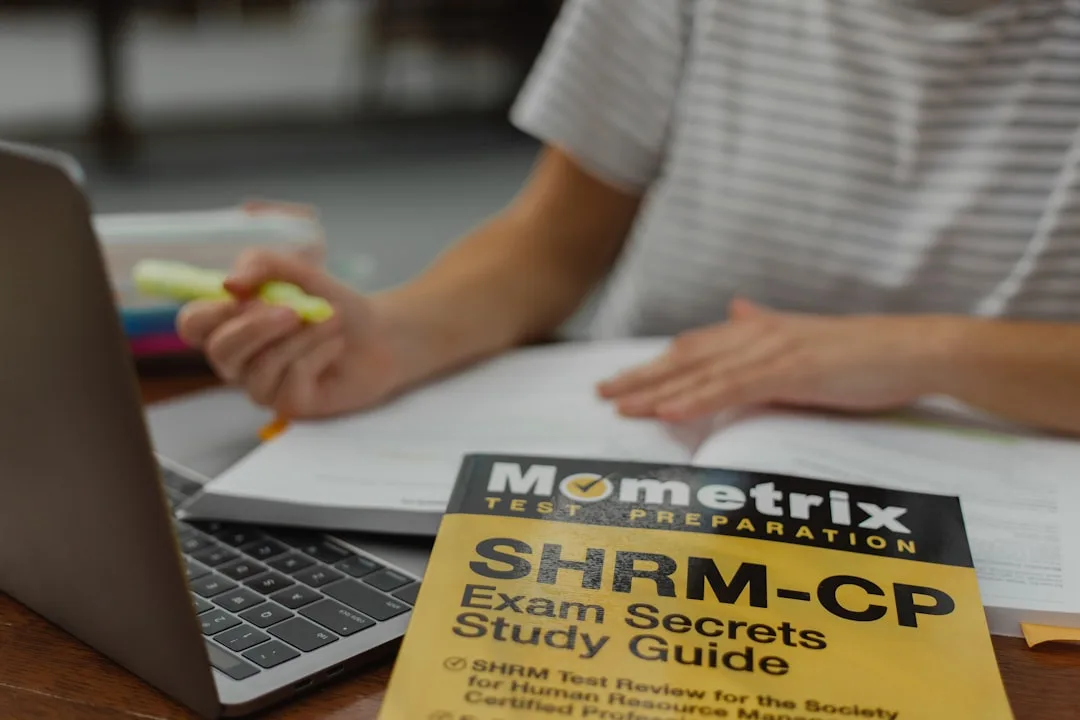
Cramming has a bad reputation in certification circles, and deservedly so for candidates who start studying 7 days before the exam. But the final 7 days of a certification campaign are not cramming in the shameful sense. They are the consolidation window where preparation actually converts into a passing score. Most candidates waste this window by continuing to learn new material, by over-practicing, or by under-resting. The last 7 days have a specific, repeatable structure that maximizes passing probability regardless of which certification you are sitting.
This guide is for the candidate who has done the work: 6 to 14 weeks of structured study, practice exam scores at or above target, and a real exam date in 7 days. It is not for the candidate who has not studied and is hoping to wing it. That candidate needs to reschedule.
What the Last 7 Days Are For
The last 7 days of certification prep are not for learning. They are for three specific things:
- Consolidating knowledge through high-volume retrieval practice
- Identifying and closing remaining weak spots
- Preparing the body and mind for peak performance on exam day
Everything you do in the last 7 days should serve one of these three goals. Studying a new topic does not serve them. Cramming flashcards you have never seen does not serve them. Watching a new video course does not serve them. These are the traps.
“The difference between a candidate who scores 820 on exam day and one who scores 750 is rarely knowledge difference. It is retrieval practice and rest. The last week is about turning what you already know into what you can access under pressure.” - Barbara Oakley, professor of engineering and author of A Mind for Numbers, speaking on the Learning How to Learn Coursera course
The Seven-Day Structure
| Day | Date Offset | Focus |
|---|---|---|
| 1 | T-7 | Full-length practice exam #1 under real conditions |
| 2 | T-6 | Wrong answer review, weak domain identification |
| 3 | T-5 | Targeted weak domain practice |
| 4 | T-4 | Full-length practice exam #2 under real conditions |
| 5 | T-3 | Wrong answer review, light practice |
| 6 | T-2 | Flashcards only, no new material |
| 7 | T-1 | Rest day, exam logistics, sleep priority |
| 8 | Exam | Exam day |
This structure assumes the exam is on day 8. Adjust if your exam date is different.
Each day has a specific purpose. Skipping or reordering these days degrades performance on exam day.
Day 1 (T-7): Full Practice Exam Under Real Conditions
The most important day of the final week is day 1, when you take a full-length practice exam under conditions as close to the real exam as possible.
Real conditions means:
- Quiet room, door closed, phone off
- Timer running with the real exam time limit
- No pausing, no looking up answers, no Googling
- No food or drink beyond what is allowed in the actual testing environment
- Single uninterrupted sitting
If you normally take practice exams in chunks, do not do that today. If you normally check answers after each question, do not do that today. If you normally allow yourself to look up uncertain topics mid-exam, do not do that today.
Score the exam honestly. Note which domains scored weakest and which question types tripped you up most. Do not try to fix anything today. Just observe.
The purpose of day 1 is diagnostic. You are finding out where you actually are, not where you hoped to be.
Day 2 (T-6): Wrong Answer Review
Day 2 is the highest-value learning day in the entire last week. Go through every incorrect answer from day 1.
For each wrong answer:
- Read the question again carefully
- Identify why you chose the wrong answer (gap, misread, rushed, lucky guess that was wrong)
- Read the explanation fully
- If the explanation references a concept you are shaky on, make a note
- Write a one-sentence summary of what you now understand
Group wrong answers by domain. Some domains will have one or two misses. Other domains will have five or more. The high-miss domains are your weak spots. These are what day 3 targets.
Do not try to re-study every domain on day 2. That is a recipe for cognitive overload. Focus on review only.
For candidates who want a structured review system, the Cornell note-taking method for certifications guide covers a format that works particularly well for final-week review.
Day 3 (T-5): Targeted Weak Domain Practice
Day 3 is the only day in the last week where you do targeted topic study. But it is not learning new material. It is reinforcing material you have already studied but where retrieval is weak.
Structure of day 3:
- Identify the two weakest domains from day 1 results
- Spend 60 to 90 minutes per domain reviewing your notes, flashcards, and textbook sections for those domains
- Take 20 to 30 practice questions from those domains specifically
- Review each wrong answer immediately
Do not study more than 2 to 3 weak domains on day 3. Trying to patch every gap produces shallow review across many domains rather than durable improvement on the most important ones.
The goal is not perfection. The goal is to move a 55 percent domain score to 70 percent. That is enough to pass.
Day 4 (T-4): Full Practice Exam #2
Day 4 mirrors day 1. Full-length practice exam under real conditions. Different set of questions (use a different practice exam or a different question bank to avoid memorization effects).
Score the exam. Compare to day 1.
Expected patterns:
- Overall score should be 3 to 8 percent higher than day 1
- Domains targeted on day 3 should show meaningful improvement
- New weak spots may have emerged (this is normal)
If your day 4 score is identical to day 1 or worse, something is wrong. Either your first exam had an unusually easy set of questions, or your day 3 study did not stick. Do not panic. The remaining days have buffer built in.
If your day 4 score is below your passing target by more than 10 percent, consider rescheduling the exam. A 2-week delay is cheaper than a failed attempt.
Day 5 (T-3): Light Wrong Answer Review
Day 5 is a calmer version of day 2. Review the wrong answers from day 4, identify patterns, note any stubborn weak spots.
Keep the session short. 2 to 3 hours maximum. The cumulative fatigue from intensive study can impair performance, and days 5 through 7 should feel progressively lighter rather than heavier.
This is also a good day to do a light review of your personal cheat sheet. Every candidate should have a single-page summary of the concepts they need to hold in memory on exam day: acronyms, number thresholds, common exceptions, specific protocols or configurations. Write this cheat sheet if you have not, and read it twice today.
Day 6 (T-2): Flashcards Only
Day 6 is flashcards. No new material. No practice exams. No textbook reading.
The purpose of day 6 is retrieval practice at high volume. Flashcards train fast recognition and pattern matching. For certification exams, fast retrieval under time pressure is exactly what matters.
Structure:
- Morning: 30 to 60 minutes of flashcard review
- Afternoon: 30 to 60 minutes of flashcard review on different domain clusters
- Evening: 30 minutes of flashcard review focused on weak spots
Use Anki, Quizlet, or paper flashcards. The medium matters less than the volume.
Do not make new flashcards on day 6. If you encounter a concept you do not know, note it and move on. Learning from scratch on T-2 is too late for that concept to stick.
For spaced repetition system setup, our guide on spaced repetition for certifications covers Anki configuration specifically.
Day 7 (T-1): Rest Day
Day 7 is rest. This is the day most candidates get wrong.
The instinct on T-1 is to study more. Candidates feel nervous and try to resolve the nervousness by cramming. This is counterproductive. Last-minute cramming does not change exam day performance in a positive direction. It often damages it by increasing cognitive load and reducing sleep quality the night before the exam.
What to do on T-1:
- Read your one-page cheat sheet twice in the morning
- Light physical activity (walk, easy workout, no intensive exercise)
- Good meals, normal hydration
- No caffeine after noon (protect tomorrow’s sleep)
- Confirm exam logistics: location, time, required ID, proctoring software installed
- Lay out what you need for the morning: ID, confirmation number, comfortable clothes
- In bed by 10 PM, aim for 8 hours of sleep
What not to do on T-1:
- Take another practice exam
- Start a new study topic
- Drink heavily (small amount is fine if it helps you sleep; do not go overboard)
- Make major life decisions (the nervousness distorts judgment)
- Stay up late with friends
The exam psychology guide on exam day tips covers additional preparation details. The test anxiety resources cover strategies if anxiety is a significant factor.
“Sleep is the strongest predictor of exam performance that candidates can control in the last 48 hours. One hour of lost sleep the night before a high-stakes exam correlates with roughly a 3 to 5 percent drop in performance for the average candidate. Protect sleep as if it were part of the exam itself.” - Matthew Walker, professor of neuroscience at UC Berkeley and author of Why We Sleep
Exam Day
Exam day has its own checklist.
Morning:
- Wake up at normal time (not earlier)
- Light breakfast, something you have eaten before
- One coffee or caffeine source, not more than normal
- Arrive at the testing center (or log into proctored exam) 30 minutes early
- Use the restroom before the exam starts
During the exam:
- Read every question twice before answering
- Flag uncertain questions for review, do not spend too long on any single one
- Manage time: check the clock every 15 questions
- If you finish early, review flagged questions. Do not re-answer confident ones.
- Watch for qualifier words like “most”, “least”, “best”, “except” that change the answer
After the exam:
- Most exams report pass/fail immediately
- Detailed score report comes later (hours to days)
- Whether you pass or fail, rest for 24 hours before deciding next steps
Practice Exam Selection
The quality of practice exams matters more than the quantity. In the last 7 days, use practice exams that closely mirror the real exam’s question style and difficulty. Do not use practice exams that are significantly easier (false confidence) or significantly harder (unnecessary stress).
| Certification | Recommended Practice Exams |
|---|---|
| AWS SAA-C03 | Tutorials Dojo, Neal Davis |
| AWS CLF-C02 | Tutorials Dojo, AWS Official |
| Azure AZ-104 | MeasureUp, Whizlabs |
| Azure AZ-305 | MeasureUp |
| CompTIA Security+ | Dion Training, CertMaster Practice |
| CompTIA Network+ | Dion Training, CertMaster Practice |
| CISSP | Sybex Test Bank, Boson |
| CCNA | Boson ExSim |
| PMP | PMTraining, Simplilearn |
For a deeper comparison of practice platforms, see our guide on the best practice test platforms compared.
Common Last-Week Mistakes
Mistake 1: Starting new study material. Reading a new book, starting a new video course, or attempting topics you have not previously studied in the final week almost always backfires. Stick with the material you know.
Mistake 2: Taking too many practice exams. Three full practice exams in the last week (days 1, 4, and 7) are too many. The exhaustion from exam simulation compounds. Two is enough.
Mistake 3: Ignoring sleep. Candidates study late, accumulate sleep debt across the week, and arrive at exam day cognitively compromised. Protect sleep from day 1 of the final week onward.
Mistake 4: Skipping the diagnostic exam. Some candidates skip the day 1 practice exam because “they already know where they are weak.” This is rarely true. The diagnostic exam reveals weak spots that study planning missed.
Mistake 5: Over-studying the day before. T-1 should be rest. Candidates who study 8 hours on T-1 out of anxiety arrive at the exam exhausted and score worse than candidates who rested.
Mistake 6: Not confirming exam logistics. Showing up at the wrong testing center, bringing the wrong ID, or having proctoring software fail to install on exam morning all happen. Confirm logistics on T-2 at the latest.
Mistake 7: Eating an unfamiliar meal. Exam day is not the day to try a new restaurant. Stick with meals your body knows. GI issues mid-exam are a real, documented cause of poor performance.
Mental Preparation
The last week is as much mental preparation as knowledge consolidation. Certification exams are high-pressure environments for most candidates, and anxiety degrades performance.
Mental preparation strategies that work:
Visualize the exam environment and your performance in it. Sit in a quiet room, imagine working through questions calmly, imagine reading the “pass” result.
Reframe nervousness as readiness. Elevated heart rate and focus are what your body does when it cares about an outcome. Lean into it rather than fighting it.
Prepare for the worst case. If you fail, the exam is retakeable. Most certifications allow retakes within 2 weeks to a month. A failed attempt is a data point, not a career ending.
Tell at least one trusted person about your exam. External accountability and support matter.
The test anxiety category of resources on P4S covers specific techniques for candidates where anxiety is severe.
The Specific Cert Tweaks
Different certifications have slightly different last-week emphases.
AWS and Azure exams
Scenario-heavy. Focus practice on reading scenarios quickly and identifying the constraints. Flash card heavy focus on service categorization and when to use which service.
Security certifications (Security+, CySA+, CISSP)
Concept-heavy with scenario application. Flashcards on control types, attack taxonomies, and incident response phases. Practice reading scenarios and identifying the appropriate control or response.
Network certifications (Network+, CCNA)
Memorization-heavy. Flashcards on port numbers, protocol behavior, cable standards. Hands-on lab review if the cert includes labs.
PMP and IT management certs
Framework-heavy. Flashcards on process groups, knowledge areas, inputs/outputs. Practice reading long scenarios and identifying the relevant framework.
The practice test platforms guide breaks down which platforms align with which exam styles.
Nutrition and Physical Preparation
The body matters. Final week nutrition and physical preparation are not afterthoughts.
Nutrition guidelines:
- Consistent meal timing across the week
- Adequate protein and complex carbohydrates
- Hydration at baseline levels (not extra water on exam day, which causes restroom breaks)
- Minimize alcohol, especially in the last 3 days
- Caffeine at your normal level, not more
Physical guidelines:
- Normal activity level
- No new workout routines
- Adequate sleep (8 hours minimum)
- Avoid injuries from intense exercise
These are not performance enhancers. They are performance protectors. Showing up at the exam with normal energy and normal focus is the goal.
For candidates tracking cognitive performance during study, the cognition resources at What’s Your IQ cover how sleep, nutrition, and exercise affect retention and working memory.
Time Management on Exam Day
Most certification exams are time-limited. Running out of time is a real failure mode.
General time management:
- Divide exam time by question count to get per-question average
- Aim for 80 percent of that average on each question
- Flag and skip questions taking more than 2x the average
- Return to flagged questions after finishing the full exam
- Leave 10 to 15 percent of total time for review
For AWS associate exams: 130 minutes for 65 questions is roughly 2 minutes per question. Aim for 90 seconds per question on the first pass.
For CISSP: 180 minutes for up to 150 questions is roughly 72 seconds per question.
For Security+: 90 minutes for up to 90 questions is exactly 60 seconds per question.
Practice under these timings during the final week’s practice exams.
The Calm of Preparation
A well-prepared candidate in the last week feels a specific kind of calm that comes from doing the work. Nervousness is natural, but it sits on top of a foundation of knowledge that has been built over weeks.
Candidates who are nervous without this foundation experience a different feeling: dread. The dread is a signal that preparation is insufficient. If you feel dread more than nervousness in the last week, consider rescheduling the exam by 2 weeks and filling the gaps.
Candidates who pass consistently describe the last week in similar terms: manageable nervousness, confidence in preparation, focus on execution rather than anxiety about outcome.
Supporting Tools and Resources
During the final week, several tools smooth the logistical side of preparation. Note-taking apps like the ones covered in our best note-taking apps guide help organize the cheat sheet and the wrong-answer review notes. For candidates doing intense reading during review, the reading strategies for certifications category covers techniques for speed and comprehension.
For technical writing skills that transfer from certification study to career advancement, Evolang covers professional writing frameworks. Consultants building practices around certification coaching can reference Corpy for business formation. Quick file conversion utilities for packaging study materials are at fileformer.com, and qr-bar-code.com hosts practical barcode utilities that come up in operational IT contexts.
The After
Whether you pass or fail, the 24 hours after the exam have their own structure.
If you pass:
- Let yourself celebrate
- Update LinkedIn within 48 hours while the momentum is fresh
- Schedule the next certification, but only if it serves a specific goal
- Reflect on what worked and what to replicate
If you fail:
- Allow one evening of disappointment
- Read the detailed score report when it arrives
- Identify the 2 or 3 domains that caused the fail
- Schedule a retake 2 to 4 weeks out and focus study entirely on those domains
- Do not take the retake from a position of panic
Fail rates on first attempts vary by certification and range from 20 percent (easier exams) to 50 percent (AWS SAP, CISSP, ML Specialty). A failed attempt is common and not career-limiting. The candidates who recover and pass the retake often end up stronger than those who passed the first attempt by a narrow margin.
References
Oakley, Barbara. A Mind for Numbers: How to Excel at Math and Science. TarcherPerigee, 2014. ISBN: 978-0399165245.
Walker, Matthew. Why We Sleep: Unlocking the Power of Sleep and Dreams. Scribner, 2017. ISBN: 978-1501144318.
Roediger, Henry L. and Mark A. McDaniel. Make It Stick: The Science of Successful Learning. Belknap Press, 2014. ISBN: 978-0674729018.
Karpicke, Jeffrey D. “Retrieval-Based Learning: Active Retrieval Promotes Meaningful Learning.” Current Directions in Psychological Science, 2012. DOI: 10.1177⁄0963721412443552.
Dunlosky, John et al. “Improving Students’ Learning With Effective Learning Techniques.” Psychological Science in the Public Interest, 2013. DOI: 10.1177⁄1529100612453266.
Ericsson, K. Anders and Robert Pool. Peak: Secrets from the New Science of Expertise. Houghton Mifflin Harcourt, 2016. ISBN: 978-0544456235.
ETS. GRE General Test Score Report: Average Performance Under Time Pressure. Educational Testing Service, 2023.
(ISC)². CISSP Exam Outline. (ISC)², 2024. https://www.isc2.org/Certifications/CISSP/CISSP-Exam-Outline
Frequently Asked Questions
Can I pass a certification exam with only 7 days of study?
Only if you already know the material from previous work or education. True cramming, starting from zero 7 days out, rarely produces passing scores on modern certification exams. The 7-day plan described here assumes 6 to 14 weeks of prior study and is about consolidation, not learning.
Should I take a practice exam the day before the real exam?
No. T-1 should be rest. Practice exams on T-1 exhaust cognitive resources that you need for exam day. Last meaningful practice exam is on T-4 in this plan, leaving 3 days of buffer for review and rest.
How many practice exams should I take in the last week?
Two full-length practice exams, on T-7 and T-4. More than two produces diminishing returns and exhausts the candidate. The value of practice exams in the last week is diagnostic and consolidation, not additional learning.
What if my practice exam scores are below passing target?
If your T-4 score is more than 10 percent below passing target, seriously consider rescheduling the exam by 2 to 4 weeks. Most certification platforms allow rescheduling with minimal or no penalty if done before 48 hours out. A 2-week delay is cheaper than a failed attempt.
Should I study the night before the exam?
Read your one-page cheat sheet twice in the morning of T-1. Beyond that, no. Late-night study on T-1 almost always correlates with lower exam performance because it reduces sleep quality and increases exam-morning cognitive load.
Is caffeine helpful on exam day?
At your normal level, yes. More than normal, no. Increased caffeine on exam day causes jitter, faster heart rate, and bathroom urgency during the exam. The goal is baseline performance, not peak stimulation.
What if I fail after following this plan?
Failing is common, especially on harder exams like AWS SAP-C02 or CISSP where first-attempt pass rates can be 50 percent or lower. Allow one evening of disappointment, then read the detailed score report, identify 2 or 3 weak domains, and schedule a retake 2 to 4 weeks out focused specifically on those gaps.