
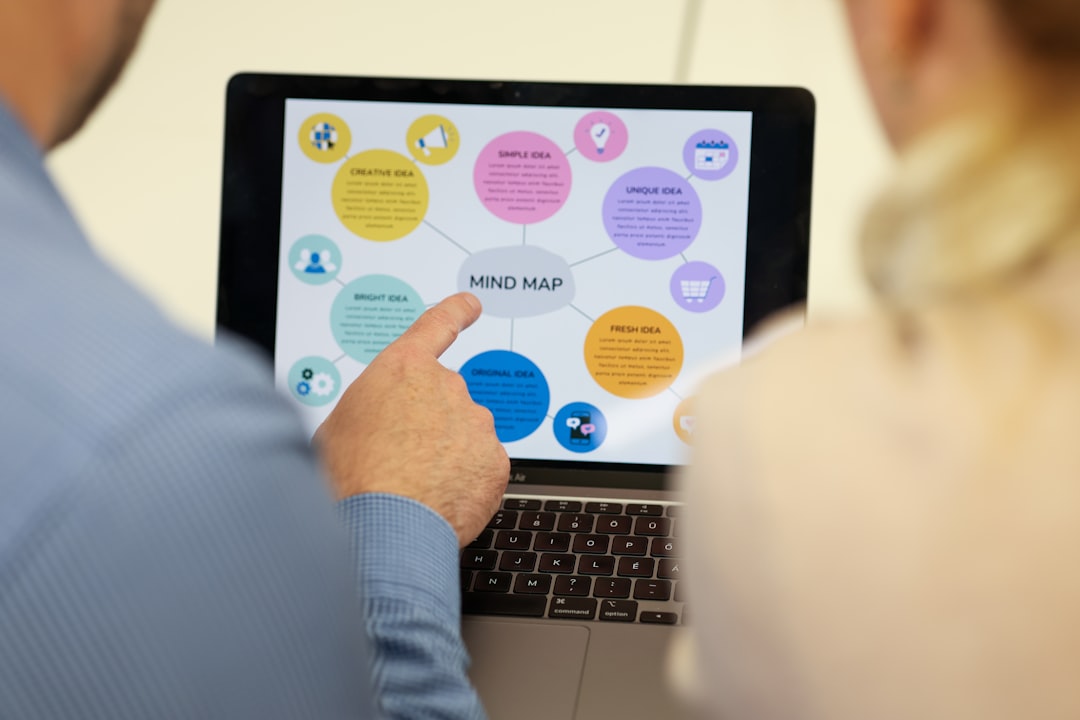
How do I use mind maps to study PMP knowledge areas?
Create a central "PMP" mind map with three branches for the three exam domains (People, Process, Business Environment). Under Process, add branches for the five process groups (Initiating, Planning, Executing, Monitoring and Controlling, Closing). Under each process group, map the key activities and outputs. This hierarchical structure mirrors the PMP exam's logic and helps candidates see where agile, predictive, and hybrid approaches are used.
The PMP exam's shift toward scenario-based questions does not eliminate the need to understand project management structure. Process group sequences, knowledge area interactions, and the distinction between predictive and agile approaches all appear in scenario context. A well-organized PMP mind map makes these structures visual and easier to retrieve under exam conditions.
PMP Mind Map Top-Level Structure
The current PMP exam is organized around three domains from the Examination Content Outline (ECO), not the PMBOK's 10 knowledge areas. Your top-level mind map structure should reflect the current exam:
Central node: PMP Exam
Three main branches:
- People (42%)
- Process (50%)
- Business Environment (8%)
Within each domain, create sub-branches for the major task clusters:
Domain 1: People Branch
Tasks in the People domain focus on leadership, team management, and stakeholder engagement:
Team Leadership
- Leadership styles (servant leadership, transformational, situational)
- Team development stages (forming, storming, norming, performing, adjourning - Tuckman)
- Motivation theories (Maslow hierarchy, Herzberg two-factor, McGregor X/Y)
- Conflict resolution approaches (confronting/problem-solving, compromising, smoothing, forcing, avoiding)
Stakeholder Engagement
- Stakeholder identification and analysis
- Stakeholder register and engagement matrix
- Communication channels formula: n(n-1)/2
Collaborative Leadership
- Empowering team members
- Servant leader behaviors
- Agile: self-organizing teams, Product Owner authority
Domain 2: Process Branch
Process domain includes both predictive (waterfall) and agile/hybrid approaches:
Predictive Approach
- Initiating: Project Charter, Stakeholder Register
- Planning: Scope, WBS, Schedule, Budget, Risk Plan
- Executing: Deliverables, Team Management, Procurement
- Monitoring and Controlling: Earned Value, Change Control
- Closing: Formal acceptance, Lessons Learned
Agile Approach
- Scrum ceremonies: Sprint Planning, Daily Scrum, Sprint Review, Sprint Retrospective
- Scrum artifacts: Product Backlog, Sprint Backlog, Increment
- Agile metrics: Velocity, Burndown chart, Cumulative Flow Diagram
- Kanban: WIP limits, pull system, continuous flow
Hybrid Approach
- Tailoring the methodology to project needs
- Using predictive for governance, agile for delivery
Domain 3: Business Environment Branch
Strategic Alignment
- Project benefits and business case
- OPM (Organizational Project Management)
- Portfolio, program, and project distinctions
Compliance and Governance
- Organizational governance frameworks
- Legal and regulatory requirements
- Health, safety, and environmental considerations
Key PMP Concept Sub-Maps
Earned Value Management Mini-Map
Create a standalone sub-map for EVM due to its formula density:
Central node: Earned Value Management
Branches:
- Base values: PV, EV, AC, BAC
- Variances: CV (EV-AC), SV (EV-PV)
- Indexes: CPI (EV/AC), SPI (EV/PV)
- Forecasts: EAC (various formulas), ETC (EAC-AC), VAC (BAC-EAC)
- Interpretation: positive variance = good for CV/SV; >1 = good for CPI/SPI
| EVM Term | Formula | Good Indicates |
|---|---|---|
| CV | EV - AC | Positive (under budget) |
| SV | EV - PV | Positive (ahead of schedule) |
| CPI | EV / AC | > 1 (under budget) |
| SPI | EV / PV | > 1 (ahead of schedule) |
Risk Management Mini-Map
Central node: Risk Management
Branches:
- Risk identification tools: Brainstorming, SWOT, Delphi technique
- Qualitative analysis: Probability/Impact matrix
- Quantitative analysis: Monte Carlo simulation, EMV, decision trees
- Risk responses (threats): Avoid, Transfer, Mitigate, Accept
- Risk responses (opportunities): Exploit, Share, Enhance, Accept
- Risk register components: risk ID, description, probability, impact, owner, response
Using PMP Mind Maps During Practice
When reviewing practice exam wrong answers:
- Identify which PMP domain and knowledge area the question belongs to
- Navigate to the corresponding mind map section
- Add any concept you missed to the mind map as a new node
- Review that mind map section twice in the following week
This creates a "failure-driven" mind map that becomes increasingly targeted at your personal knowledge gaps.
Frequently Asked Questions
Should I base my PMP mind map on the PMBOK 7th Edition or the ECO? Base your mind map's top-level structure on the ECO (People, Process, Business Environment domains) because that is what the current exam tests. Use PMBOK 7th Edition for understanding the performance domains. Use the Process Groups Practice Guide for the predictive process details that still appear in the Process domain. Your mind map should reflect the exam, not the book.
How do I handle agile and predictive content in the same mind map? Create parallel branches within the Process domain: one for Predictive approach and one for Agile approach. Under Process > Planning, have branches for both "Predictive planning activities" (WBS, schedule, budget) and "Agile planning activities" (backlog refinement, sprint planning). This dual-track structure mirrors the exam's hybrid reality.
Can I reuse my PMP mind map for PMI-ACP or PMI-PBA preparation? Your PMP People domain map overlaps significantly with PMI-ACP (Agile Certified Practitioner) content. Expand the agile sections of your PMP mind map into a dedicated PMI-ACP map. The overlap reduces preparation time for related certifications.
References
- Project Management Institute. (2021). PMP Examination Content Outline. PMI. https://www.pmi.org/certifications/project-management-pmp
- Project Management Institute. (2021). A Guide to the Project Management Body of Knowledge (PMBOK Guide) -- Seventh Edition. PMI.
- Griffiths, M., and Dionisio, C. S. (2021). PMI-Authorized PMP Exam Prep. Project Management Institute.
- Buzan, T. (2006). The Ultimate Book of Mind Maps. Harper Collins.
- Project Management Institute. (2017). Agile Practice Guide. PMI.
- XMind. (2024). Project management mind map templates. https://xmind.app/
Frequently Asked Questions
How do I use mind maps to study PMP knowledge areas?
Create a central PMP mind map with three branches for the three exam domains (People, Process, Business Environment). Under Process, add branches for the five process groups. Under each group, map key activities and outputs to see where agile, predictive, and hybrid approaches are used.
Should I base my PMP mind map on the PMBOK 7th Edition or the ECO?
Base your top-level structure on the ECO (People, Process, Business Environment) because that is what the current exam tests. Use PMBOK 7th Edition for understanding performance domains and the Process Groups Practice Guide for predictive process details.
How do I handle agile and predictive content in the same mind map?
Create parallel branches within the Process domain: one for Predictive approach and one for Agile approach. Under Planning, have branches for both WBS/schedule/budget (predictive) and backlog refinement/sprint planning (agile). This dual-track structure mirrors the exam’s hybrid reality.